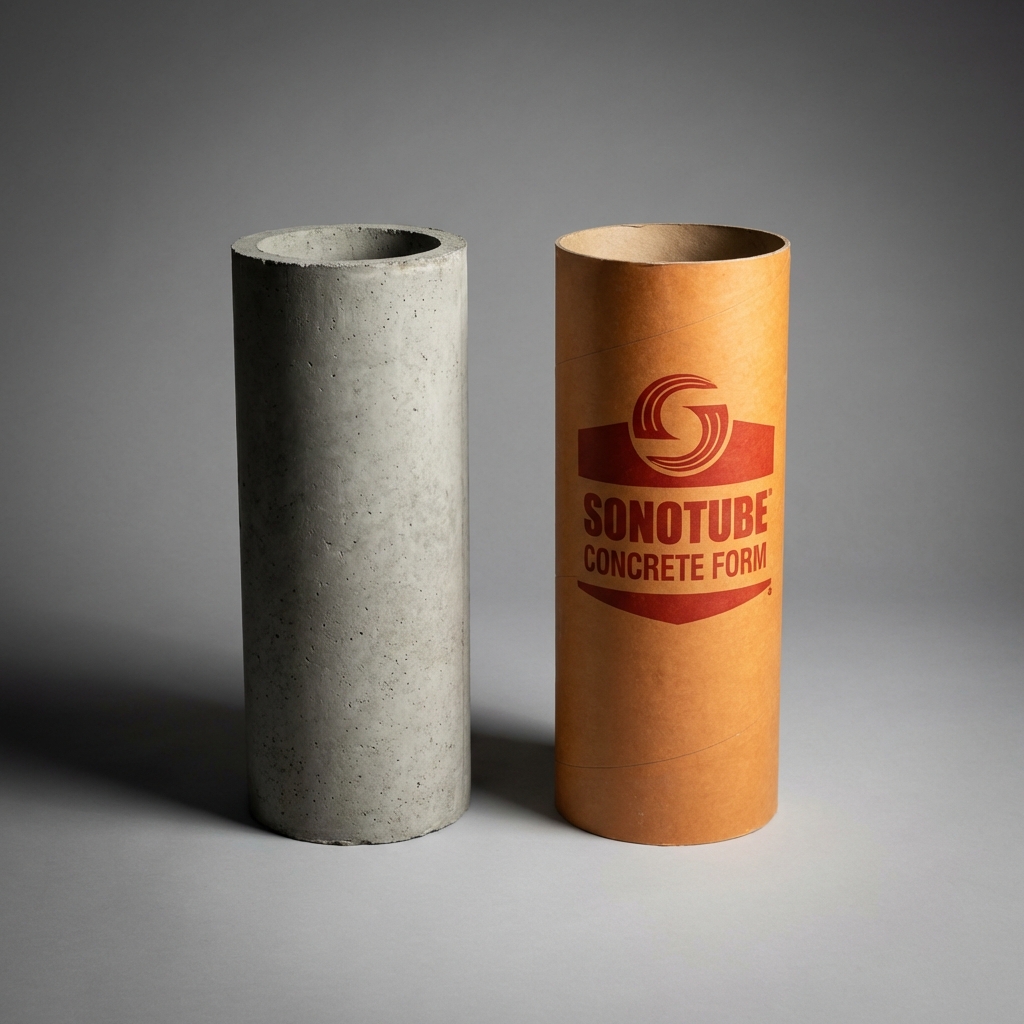
How to Calculate Concrete for Sonotubes: A Step-by-Step Formula
Don’t order too much concrete! Learn the simple math and formulas to calculate the exact volume of concrete needed for any Sonotube size.
Azeem Iqbal
Editor

How to Calculate Concrete for Sonotubes: A Step-by-Step Formula
Mathematics on a construction site can be stressful. You have a muddy hole, a waiting cement truck, and a crew looking at you. Being short on concrete is a disaster; ordering way too much is a waste of money.
Calculating the volume of a cylinder (your Sonotube) is actually one of the simpler geometry problems. Here is how to do it perfectly every time.
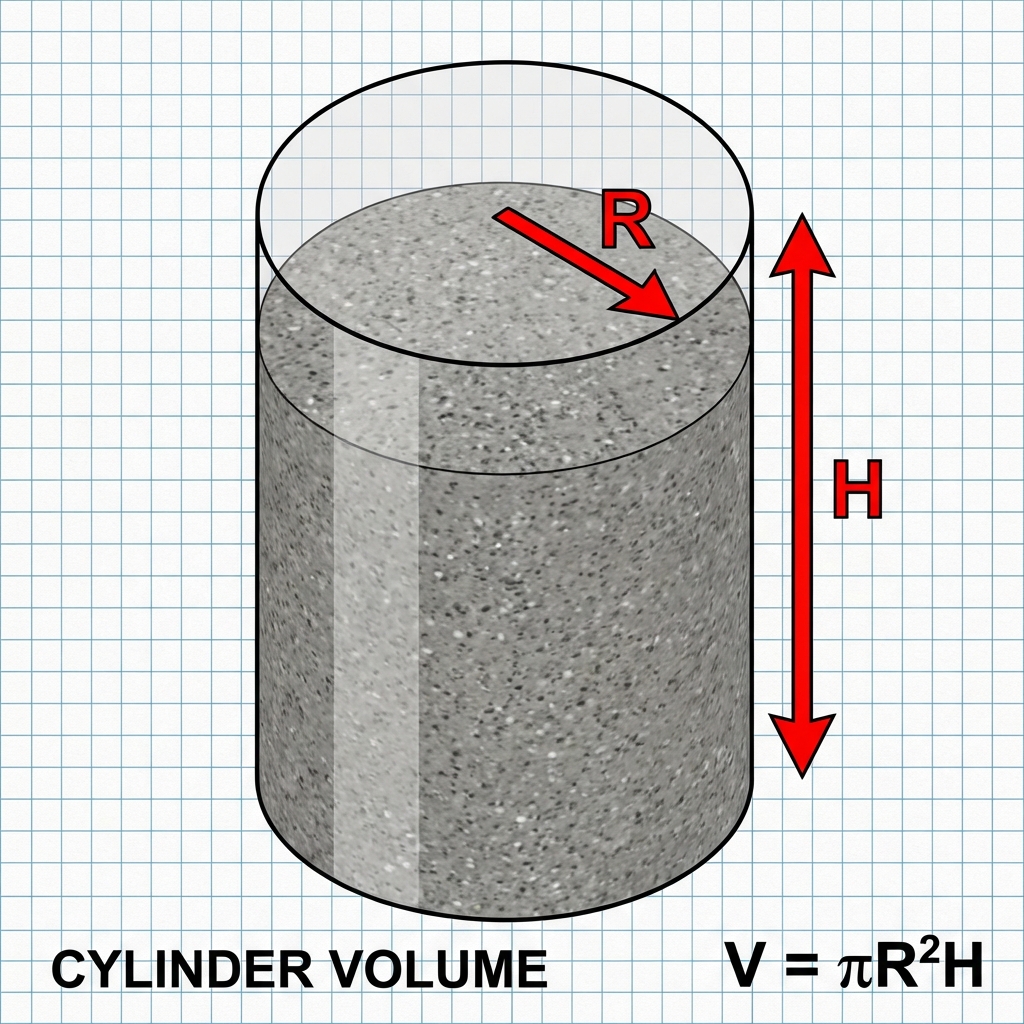
The Golden Formula: V = πr²h
Don’t panic. You don’t need a scientific calculator for this.
- π (Pi): ~3.14
- r (Radius): Half of the diameter.
- h (Height): How deep/tall the tube is.
Step 1: Get Your Radius (in Feet)
Most people make the mistake of mixing inches and feet. Convert everything to feet first.
- Diameter: 12 inches
- Radius: 6 inches = 0.5 feet
Step 2: Calculate the Area
Square the radius and multiply by Pi.
0.5 × 0.5 = 0.250.25 × 3.14 = 0.785 sq ft- Fun Fact: A 12-inch circle is almost exactly 0.8 square feet.
Step 3: Multiply by Height
If your tube is 4 feet deep:
0.785 sq ft × 4 ft = 3.14 cubic feet
Converting to “Bags”
Knowing “3.14 cubic feet” doesn’t help you at Home Depot. You need to know “how many bags.”
Standard Yields:
- 80lb Bag: ~0.60 cubic feet
- 60lb Bag: ~0.45 cubic feet
- 40lb Bag: ~0.30 cubic feet
The Math: To find the bags for our 12-inch, 4-foot deep tube (3.14 cu ft):
3.14 / 0.60 (80lb bag) = 5.23 bags
The Reality: You can’t buy 0.23 of a bag. You need 6 bags.
- Pro Tip: Always round UP.
The Shortcuts (Bag Estimator)
Here is a cheat sheet to save you the math for a 4-Foot Deep hole:
| Tube Size | 80lb Bags Needed | 60lb Bags Needed |
|---|---|---|
| 8 Inch | ~2.5 Bags | ~3.5 Bags |
| 10 Inch | ~4 Bags | ~5 Bags |
| 12 Inch | ~5.5 Bags | ~7 Bags |
| 14 Inch | ~7.5 Bags | ~10 Bags |
The “Bigfoot” Factor
Are you using a belled footing form at the bottom? These plastic bells add significant stability but also hold a lot of concrete.
- Standard Bell: Adds ~1.5 to 2 cubic feet of volume.
- Impact: That is an extra 3-4 bags of concrete per hole just for the base! Forget this, and you will run out of mix halfway up the tube.
Tips for the Pour
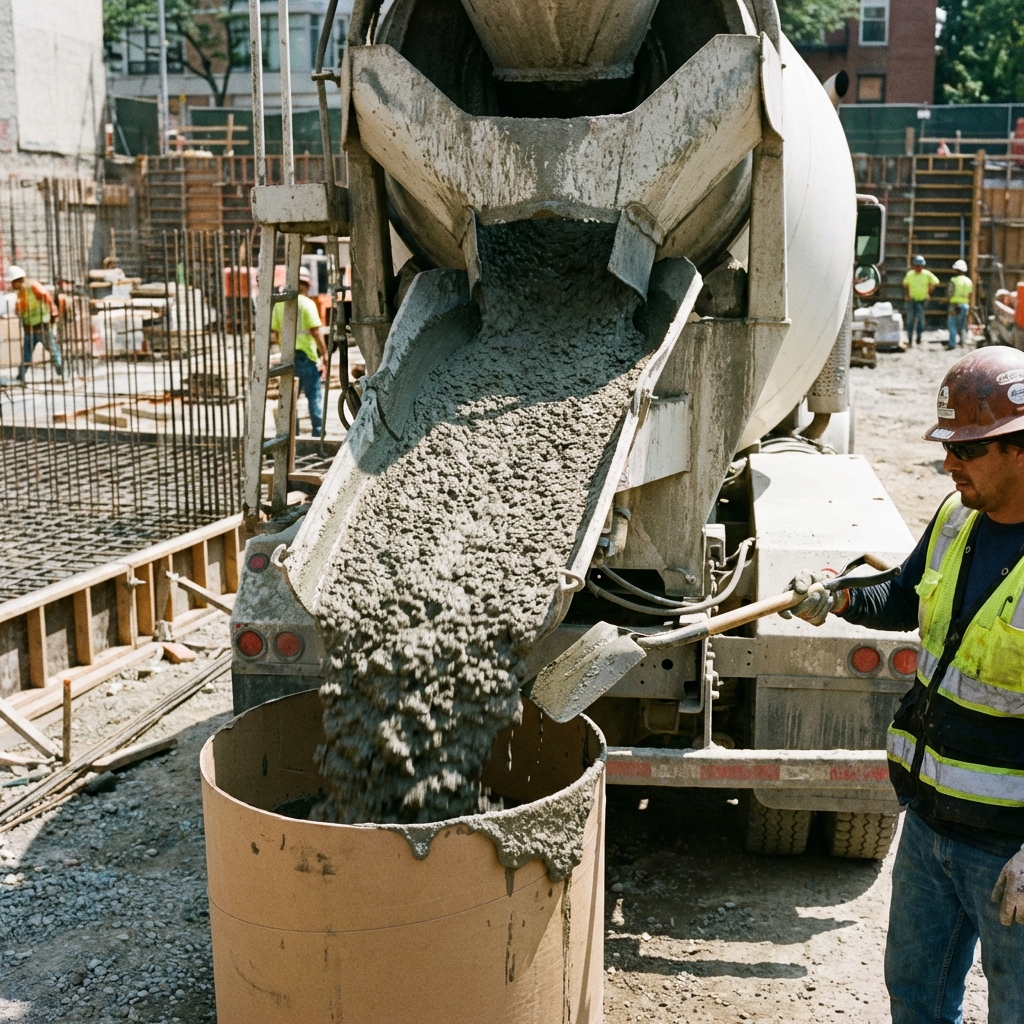
- Measure Twice: Measure your actual hole depth. A “4-foot” hole often ends up being 4’6” after cleaning out loose dirt.
- Bulge Factor: Cardboard tubes can swell slightly under the pressure of wet concrete. Add 5% to your total volume.
- Spillage: Pouring from a wheelbarrow into a 10-inch target is messy. Assume you will drop some on the ground.
By converting to feet early, remembering the base, and adding a safety margin, you will nail the order every time.
? Frequently Asked Questions
What is the formula for Sonotube concrete volume?
How many cubic feet is a 60lb bag of concrete?
Should I add extra concrete for safety?
How do I calculate for 10 holes at once?
Does the flared footing count in the calculation?

About Azeem Iqbal
A passionate advocate for data-driven training. Dedicated to providing accurate tools and guides to help you optimize your cycling performance.