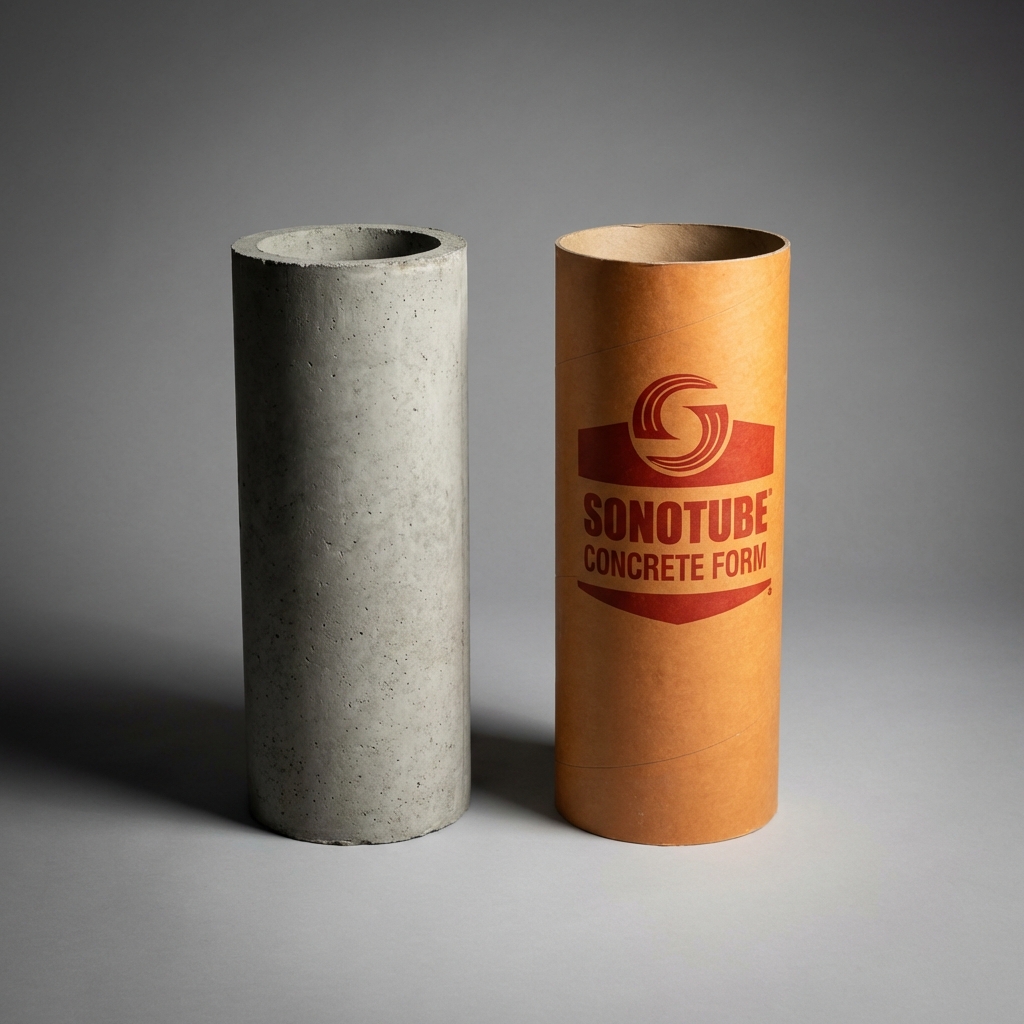
Sonotube Sizes Guide: Choosing the Right Diameter for Your Project
Confused about Sonotube sizes? From 6-inch fence posts to 24-inch deck footings, find out which diameter is perfect for your construction needs.
Azeem Iqbal
Editor

Sonotube Sizes Guide: Choosing the Right Diameter for Your Project
Walking into the concrete aisle of your local hardware store can be overwhelming. You see a row of cardboard tubes ranging from skinny pipes to massive industrial columns. Which one is right for your project?
Choosing the correct Sonotube size is a balance between structural necessity, ease of work, and budget. Go too small, and you risk a weak foundation. Go too big, and you waste money on bags of concrete you didn’t need.
Common Sizes and Their Best Uses
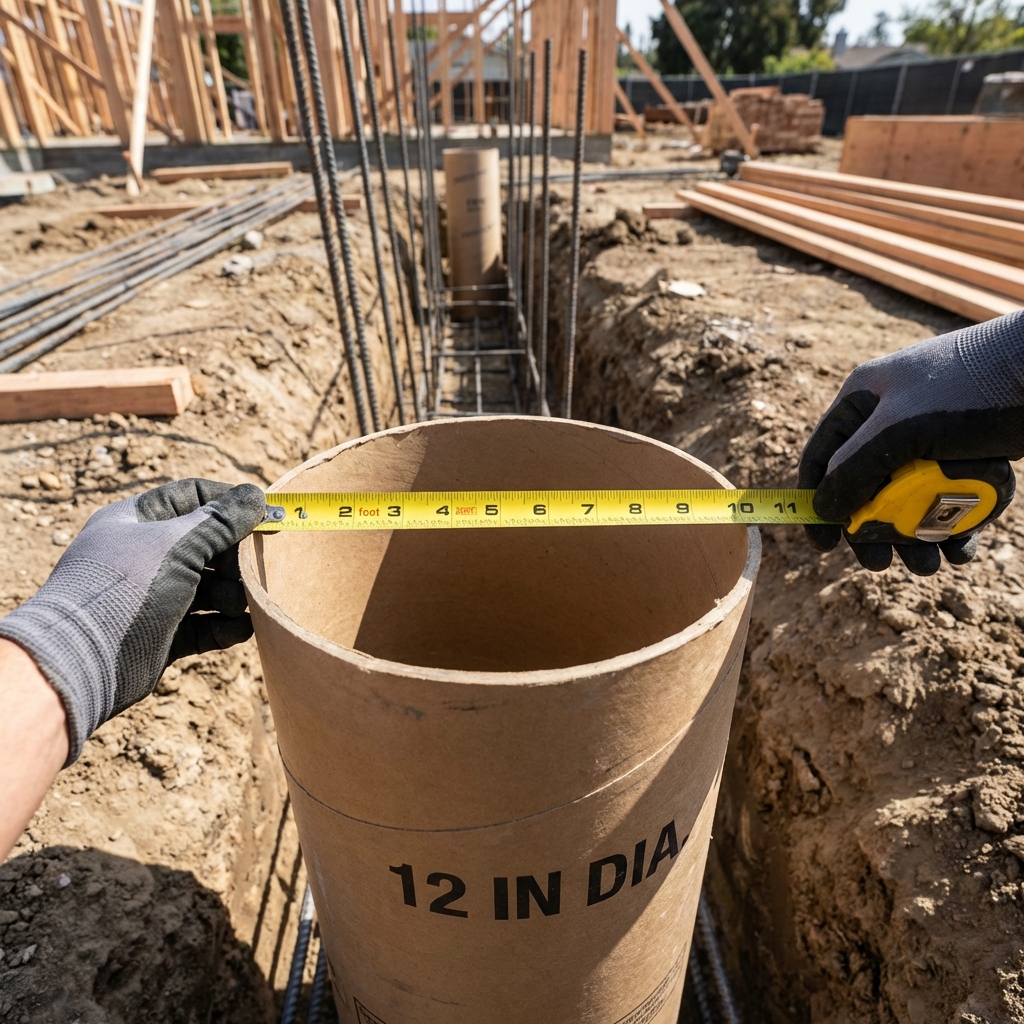
Sonotubes are measured by their inner diameter. The wall thickness varies slightly but usually adds less than a quarter-inch to the outside.
The Small Guys: 6-Inch and 8-Inch
These are the “Light Duty” workhorses. They require very little concrete to fill (less than one bag per foot usually).
- Best Uses: Fence posts, mailbox posts, flagpole bases, small sign posts.
- Pros: Cheap, lightweight, easy to dig holes for.
- Cons: Hard to aim concrete into (small target), not stable enough for large decks.
The Standard Standard: 10-Inch
This is the “Goldilocks” size for many DIYers. It is substantial enough to feel solid but manageable to mix by hand.
- Best Uses: Small decks, landings, heavy fence gates, gazebo supports.
- Pros: Good balance of strength and volume.
- Cons: Can still be tight adjusting a 6x6 post bracket if you are slightly off-center.
The Heavy Hitters: 12-Inch and Up
When you are building something that people will stand on, 12-inch is the professional starting point.
- Best Uses: Main deck supports, house additions, pole barns, large pergolas.
- Pros: The extra 2 inches of width (vs 10-inch) gives you critical “wiggle room” to position anchor bolts perfectly. Massive visual presence.
- Cons: Heavy. A 4-foot deep 12-inch hole produces a LOT of dirt to remove and requires a lot of concrete (approx 2+ bags per foot).
Visual Proportions: The “Scale” Factor
It is not just about engineering; it is about aesthetics.
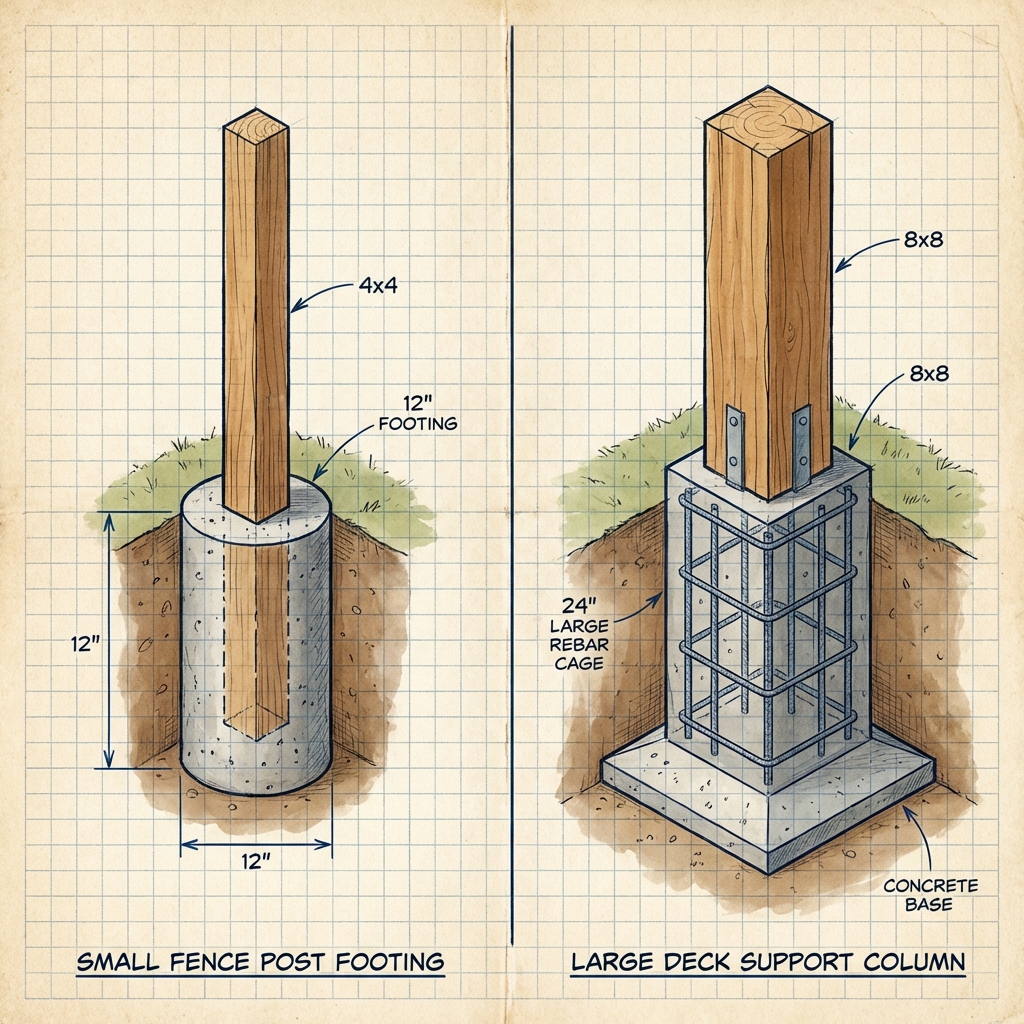
Imagine a chunky 6x6 cedar post sitting on a spindly 8-inch concrete pier. It looks top-heavy and awkward.
- Rule of Thumb: Your concrete pier should be visually wider than the wood post it supports.
- 4x4 Post: Use at least an 8-inch or 10-inch tube.
- 6x6 Post: Use at least a 12-inch tube.
Code Requirements
Before you buy, check your local building code.
- Frost Line: In cold climates, codes mandate the depth (often 42” or 48”), but they also dictate diameters for occupied structures.
- Uplift Protection: Larger diameter tubes have more surface area friction with the soil, which helps resist “uplift” from frost heave better than skinny smooth tubes.
The Volume Trap
Be careful upgrading size “just to be safe.” The volume of a cylinder increases exponentially with diameter, not linearly.
- Going from an 8-inch to a 12-inch tube doesn’t just add 50% more concrete… it adds 125% more concrete!
- Always run the numbers on a calculator before you dig. Hand-mixing 30 bags instead of 12 is a mistake you only make once.
Summary Table
| Diameter | Excavation Needed | Concrete Vol (per ft) | Ideal For |
|---|---|---|---|
| 6” | Post-hole digger | ~0.2 cu ft | Mailboxes, line fences |
| 8” | Post-hole digger | ~0.35 cu ft | Corner posts, small piers |
| 10” | Power auger / Shovel | ~0.55 cu ft | Small decks, porches |
| 12” | Power auger | ~0.8 cu ft | Large decks, additions |
| 16” | Backhoe | ~1.4 cu ft | Commercial, pole barns |
choosing the right size ensures your project stands tall, looks proportional, and doesn’t break your back (or bank) with excess concrete.
? Frequently Asked Questions
What are standard Sonotube sizes?
What size Sonotube for a mailbox post?
Do I need a 10 or 12 inch Sonotube for a deck?
How tall do Sonotubes come?
Can I cut a Sonotube to size?

About Azeem Iqbal
A passionate advocate for data-driven training. Dedicated to providing accurate tools and guides to help you optimize your cycling performance.